
Why Layout Migration Beats Schematic Migration for Analog IP

For analog IP reuse, the layout is the source of truth


Ask any analog designer how they want to migrate IP, and the answer is almost always the same: don’t rebuild it, move it. Engineers want to migrate the existing layout, preserving silicon-proven physical implementation and minimizing risk. In practice, however, direct layout migration is often dismissed as too difficult or impractical, pushing teams toward schematic updates and full layout regeneration. While schematic-first approaches may appear cleaner on paper, experience consistently shows that direct layout migration delivers lower risk, faster turnaround, and more predictable results, especially for analog and mixed-signal IP.


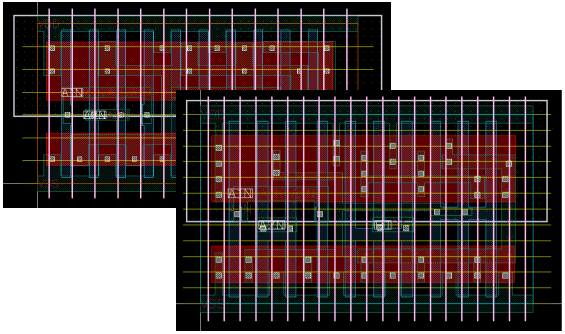
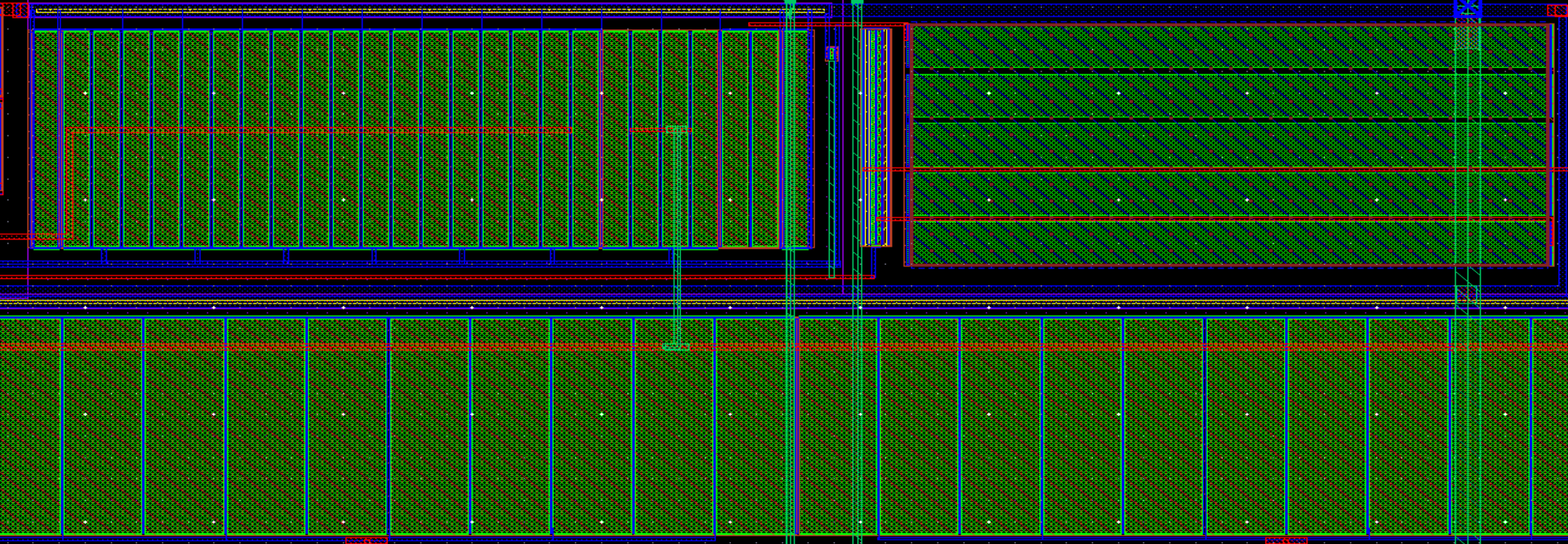
A mature layout contains far more knowledge than the schematic captures. Device placement, orientation, matching structures, routing topology, and parasitic balancing are the result of engineering judgment and silicon learning. While the schematic describes circuit function, product success is often encoded in the layout. Direct migration preserves this physical intelligence, whereas schematic regeneration frequently loses subtle but performance-critical details.


Parasitics are another decisive factor. Analog and RF designs rely on carefully balanced wiring, coupling, and symmetry that exist only in the physical implementation. Regenerating layout from a schematic may produce a functionally correct circuit, but not a performance-equivalent one. Migrating the layout enables early extraction in the new process, allowing designers to tune the circuit with real parasitic data and move toward signoff with confidence.


Direct layout migration also reflects the reality of IP porting. While EDA demos start from pristine databases, real-world IP often includes missing constraints, outdated schematics, mismatched hierarchy, or hand-crafted geometry that was never meant to be rebuilt. Layout migration works from whatever exists today, and remains the fastest path to silicon in a new process or foundry.


Scale further amplifies this advantage. Even the most advanced schematic retargeting tools work best on small to medium, well-structured blocks. They do not scale well to large analog IP such as wireless cores or SerDes, which are deeply hierarchical and heavily dependent on layout-defined behavior: parasitics, coupling, symmetry, and routing topology, that is not fully captured in schematics. As complexity grows, automation breaks down and manual rework dominates the schedule.


Schematic migration still plays an important role. It enables early simulation, supports LVS, and provides functional reference. But a flow that relies on schematics to regenerate layout is not true migration, it's redesign by another name.


In practice, successful migrations treat the layout as the real circuit, schematics are only a description. Direct layout migration preserves silicon-proven physical relationships: placement, matching, routing topology, and parasitics, that simply cannot be reconstructed from schematics alone. By building on what already works, teams reduce silicon risk, avoid unnecessary redesign cycles, and dramatically shorten time to reuse in a new process or foundry. Schematic retargeting still has value for well-constrained sub-blocks or localized updates, but for large, mature and complex analog IP, rebuilding from scratch almost always introduces more uncertainty than improvement. Migration without the layout is not modernization—it's just redesign by another name.


31 October 2025
Why PDKs Are the Next Frontier for IP Theft
by Bronte Hobson-Scott 7 August 2025
IN2FAB Talks Semiconductors at UMaine’s Semiconductor Camp
2 April 2025
Photonics and the Tech Race: Safeguarding National and Corporate Security in the Battle for Dominance
13 January 2025
Unsecured PDKs and Pcells are a major security risk
by VF1935 25 October 2024
Driving Circuit Migration and PDK Security in the Microelectronics Commons
19 March 2024
Automated modifications to standard cell libraries saves time and money
13 December 2023
Rapid porting accelerates SoC development using existing cores or 3rd party IP.
by VF1935 16 August 2023
IN2FAB to add DFM capability to OSIRIS tools with support from Innovate UK
25 June 2023
Database translation tools enable rapid circuit integration
19 April 2023
Migrating standard cells pays huge dividends